- RAPID Neurofascial Reset
Talk directly to the nervous system.
RAPID NFR is a precise, science-based manual therapy that helps identify the drivers behind pain—not just the place you feel it. No pounding, no guesswork.
How a Session Works
-
Assess
You’ll be asked specific questions relating to your pain, including what movements aggravate your symptoms or don’t have full range of motion.
-
Signal
We identify neural drivers of your pain and limited range of motion. Your therapist will pinpoint where your pain is, and ask you to preform active movement while stimulating the painful spot.
-
Restore
After initial treatment points, we will reassess to see what’s changed during your treatment. You’ll be asked to repeat the same movements that aggravated your symptoms before treatment to discover if they feel different. Most people feel a significant change in their pain and tension.
— BEST FOR
-
Chronic Pain
Old injuries, recurring tension, and stubborn pain patterns that haven’t responded to other care.
-
Restricted Motion
Stiffness, limited range, and movement compensations rooted in protective neural patterns.
-
Post-Injury
Rehab plateaus, scar tissue, and lingering guarding long after the tissue has healed.
-
Performance
Fine-tune movement quality, reduce inefficiencies, and recover faster between training blocks.
Talk directly to the nervous system.
RAPID NFR is a precise, science-based manual therapy that helps identify the drivers behind pain—not just the place you feel it. No pounding, no guesswork.
- Rapid Neurofascial Reset
How a Session Works
-
Assess
You’ll be asked specific questions relating to your pain, including what movements aggravate your symptoms or don’t have full range of motion.
-
Signal
We identify neural drivers of your pain and limited range of motion. Your therapist will pinpoint where your pain is, and ask you to preform active movement while stimulating the painful spot.
-
Restore
After initial treatment points, we will reassess to see what’s changed during your treatment. You’ll be asked to repeat the same movements that aggravated your symptoms before treatment to discover if they feel different. Most people feel a significant change in their pain and tension.
common conditions treated with RAPID NFR
-
Headaches/Migraines
- Shoulder Pain
-
Tennis/Golfers Elbow
- Shin Splints
- Vertigo
- Bell’s Palsy
- Neuro Hypersensitivity
- Upper Back Pain
-
Lower Back Pain
- Reduce Specific Pain
- Whiplash
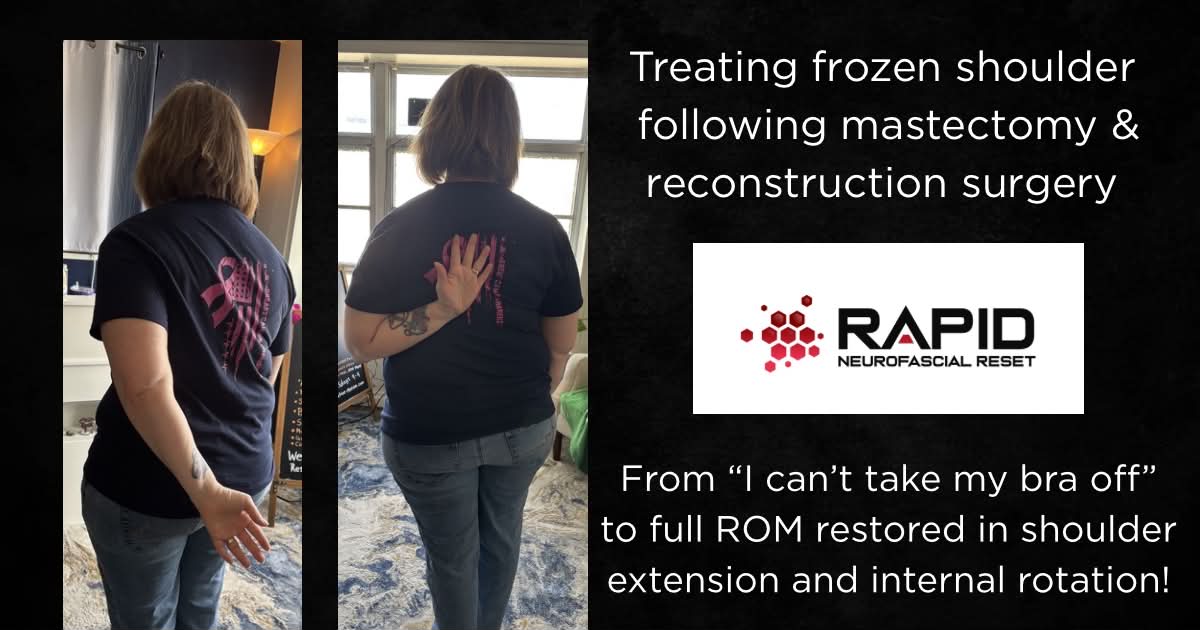
- Frozen Shoulder
- Tinnitus
- Heel Spurs
- Carpal Tunnel Syndrome
- Arthritis
- Sciatica
- TMJ
- Trigeminal Neuralgia
- Plantar Fasciitis
- Ankle Pain
- Knee Pain and Instability
- Baker’s Cysts
- Bunions
- Bursitis
- Pelvic Floor Dysfunction
Finally, say goodbye to managing your pain. RAPID NeuroFascial Reset (NFR) is a neurologically focused manual therapy that combines targeted hands-on treatment with active movement to help reduce pain and restore function.
Instead of chasing symptoms, RAPID helps identify the drivers behind pain and movement limitations. By working with the nervous system, treatment is designed to create meaningful changes in mobility, tension, and comfort—often faster than traditional approaches.
-
Nervous System Focused
-
Active Movement Integration
-
Performed Over Clothing
-
Evidence-Informed Care
Every session is tailored to your unique presentation, goals, and comfort level.
If you’re serious about getting your life back, book a RAPID session and discover the possibilities!
Book Rapid NFR!
Restorative Motion
Scheduling
Location
- 106 E Knight St, Eaton Rapids, MI 48827
— Formerly Great Lakes Barefoot Massage
Hours
- Tues, Wed, Fri - 9AM-4PM
- Saturday (Every Other) - 10AM-5PM
- Additional Times May Be Available
Socials